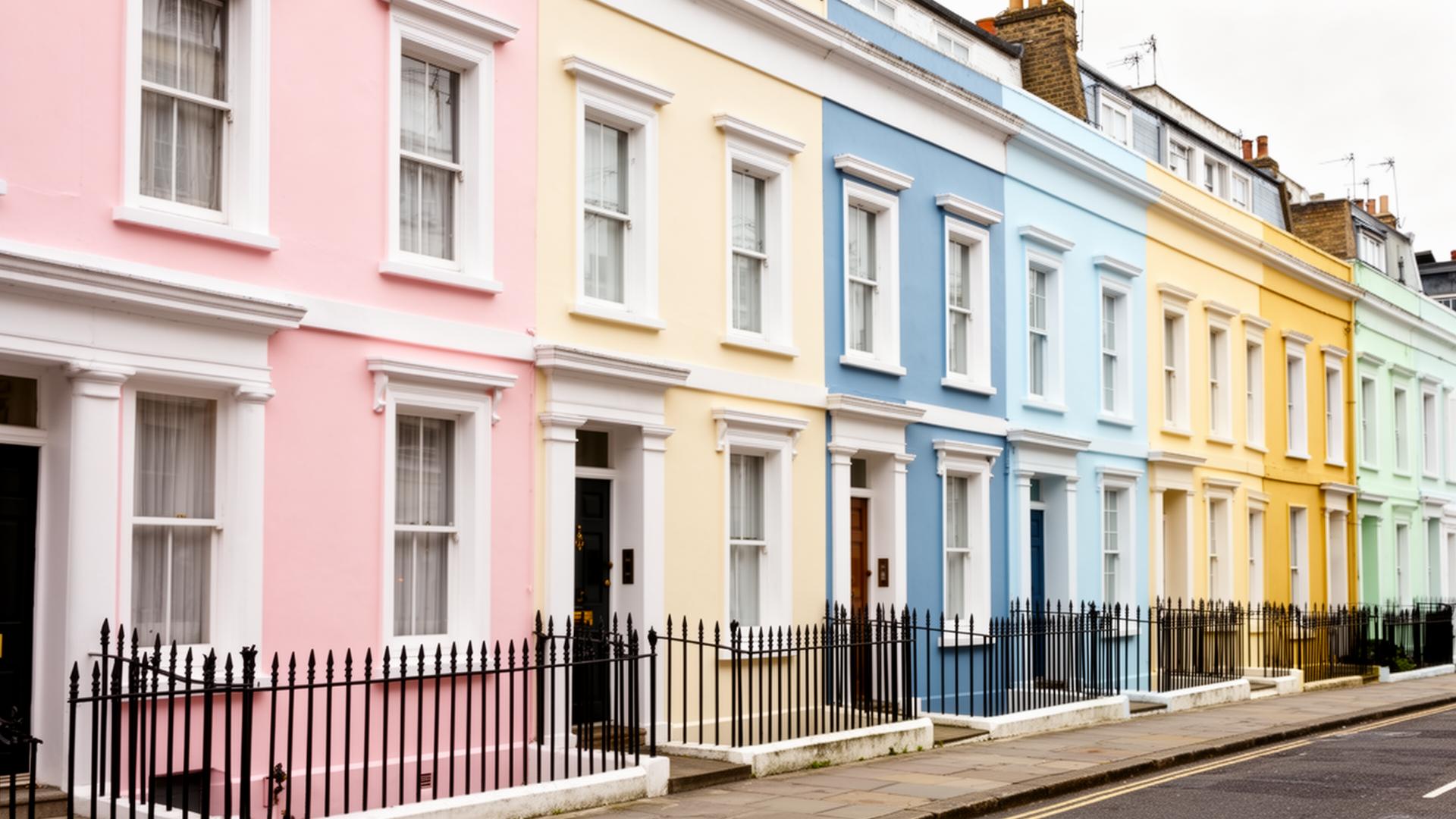
Cambridge sits on highly shrinkable Gault Clay. Combined with the city's many mature trees and Victorian properties, that makes clay-shrinkage subsidence one of the most common structural issues seen in local enquiries.
The ground beneath Cambridge
Cambridge is built almost entirely on Gault Clay, a notoriously shrinkable, blue-grey marine clay with one of the highest plasticity indices in any major English city. River-terrace gravels along the Cam introduce localised variation but the dominant foundation soil is unambiguously shrinkable.
What that means for a survey here: A large proportion of Cambridge's relevant housing stock sits inside a conservation area or carries a Tree Preservation Order, and remedies that would be straightforward elsewhere, tree felling, raft replacement, visible repair, require a much more carefully evidenced case before the local authority will entertain them.
Cambridge housing stock and what it means for foundation behaviour
Late-Victorian and Edwardian terraces line Mill Road, Romsey and Chesterton; large detached villas sit in Newnham; modern infill and the West Cambridge expansion add a layer of post-2000 build over former farmland.
The mix matters because the typical foundation depth, wall construction and drainage age vary enormously between these property types. A proportionate diagnosis in Cambridge starts with reading the building before reading the cracks.
Cambridge neighbourhoods specialists in our network frequently cover
Enquiries from these Cambridge suburbs and local areas are routinely matched to a local firm in our network. Coverage extends across the wider Cambridgeshire, postcodes outside this list can still be served; pick the nearest listed area and we will pass your details to a qualified specialist firm covering your location.
Tree species commonly implicated in local cracking enquiries
The species most often relevant to subsidence diagnoses in Cambridge include willow, english oak, lime and horse chestnut . Mature individuals of these species sitting within roughly one tree height of a shallow-founded Cambridge property are a routine input into the diagnostic conversation, though tree proximity alone does not amount to a diagnosis, and many local enquiries that look tree-driven on first inspection turn out to be drainage-led on closer reading.
Named local triggers commonly seen in Cambridge subsidence enquiries
- Willows close to riverside properties in Newnham and Grantchester Meadows
- Clay shrinkage on Mill Road and Romsey terraces during dry summers
- College and conservation-area tree-protection restrictions limiting standard remedies
- Listed-building constraints making intrusive investigation harder to authorise
A representative Cambridge case
The following is an illustrative summary of the type of enquiry commonly seen in Cambridge and is not a specific client case study.
A typical Cambridge instruction: a Victorian terrace on Mill Road develops cracking after the second consecutive dry summer; the homeowner's contractor recommends underpinning. The independent inspection identifies clay shrinkage with a Tree Preservation Order limiting the obvious arboricultural remedy, and the recommended sequence is monitoring through a wet winter combined with a formal application for crown management of the protected tree.
What an independent Cambridge subsidence survey typically involves
A focused inspection by an accredited surveyor or structural engineer, followed by a written report. The inspection typically covers external elevations, internal walls and ceilings, accessible drainage, floor levels, and any mature trees within twenty metres , read against the specific Cambridge geology and housing stock context set out above. Crack patterns are sketched, widths measured against a calibrated gauge, photographs taken against a scale reference. The output is a clear diagnosis, a BRE damage classification, and a proportionate recommended next step you can hand to your insurer, buyer or lender.
Fees for Cambridge surveys
Fees for a Cambridge subsidence survey are quoted individually based on the property and the situation, there is no flat tariff. See the survey cost page for a plain-English account of what actually drives the fee. Add-on services like CCTV drainage and cause investigation and monitoring are quoted separately when warranted.
For Cambridge insurance claims and contested cases
A meaningful share of Cambridge enquiries comes from homeowners pushing back on insurer-led recommendations for underpinning that the underlying evidence, read against the specific local geology and tree context above, does not support, or homeowners whose subsidence claim has been rejected on grounds they want a second opinion on. Independent specialist firms in our network act as the engineering counterweight in those conversations. More on insurance claim support.
Coverage around Cambridge
Specialist firms in our network covering Cambridge routinely also serve Cambridge city and South Cambridgeshire, the Cambridge-to-Stansted M11 corridor and west Suffolk including Newmarket and Bury St Edmunds. If your postcode is further afield, pick the nearest listed location or send the photo enquiry and a qualified specialist covering your area will pick it up, subject to availability.
How to speak to a specialist in Cambridge
Send photos of the cracks and a brief description through the form on this page. A qualified subsidence specialist will review your enquiry personally and reply with an honest opinion on whether a paid inspection is warranted. If it is, you'll be given a clear quote before anything is booked. No commission on the outcome , independent diagnosis is the only product.